1.1 INTRODUCTION TO COMMUNICATION
Communication is simply the act of transferring information from one place, person or group to another. Every communication involves (at least) one sender, a message and a recipient. This may sound simple, but communication is actually a very complex subject.

The transmission of the message from sender to recipient can be affected by a huge range of things. These include our emotions, the cultural situation, the medium used to communicate and even our location. The complexity is why good communication skills are considered so desirable by employers around the world: accurate, effective and unambiguous communication is extremely hard.
1.1.1 Communication skills
Communication skills may take a lifetime to master, if indeed anyone can ever claim to have mastered them. There are however, many things that you can do easily to improve your communication skills and ensure that you are able to transmit and receive information effectively.
Communication skills are the abilities you use when giving and receiving different kinds of information.
Example: Abraham Lincoln; as a communicator Lincoln will long be remembered for his inspiring words. Not only did he change the course of human history, but he set a standard for future leaders.
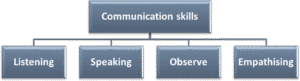
- Listening: It is a key to all effective communication. Without the ability to listen effectively, messages are easily Good listening allows us to demonstrate that we are paying attention to the thoughts, feelings and behaviours of the other person (seeing the world through their eyes). This is crucial to maintaining productive relationships and sometimes the only way to establish communication.
- Speaking: Speaking skills also help to assure that one won’t be misunderstood by those who are listening. This is crucial to maintaining productive relationships and sometimes the only way to establish communication. Speaking skills also help to assure that one won’t be misunderstood by those who are
- Observation: Informs us about objects, events, attitudes and phenomena using one or more senses. “Observation is the action or process of observing something or someone in order to gain information”. Our observation skills inform us
about objects, events, attitudes and phenomena using one or more senses.
- Empathising: Understand and share the feelings of It can improve positive communication. Empathy is the ability to accurately put yourself “in someone else’s shoes” to understand the other’s situation, perceptions and feelings from their point of view and to be able to communicate that understanding back to the other person. Empathy is a critical skill for you to have as a leader.
Example: Orpah Winfrey – she speaks out about issues that are on the minds of the people in her audience and she does so honestly. developing empathy and learning to put the focus on other people can help make anyone a better communicator.
1.1.2 Types of communication
Communication plays a very important part in everyone’s life. The better we communicate the more we are accepted in society and at workplace. There are 2 types of communication.
They are given below:
® Formal communication
® Informal communication
1.2 FORMAL COMMUNICATION
Formal communication refers to the flow of official information through proper, predefined channels and routes. The flow of information is controlled and needs deliberate effort to be properly communicated.
Formal communication follows a hierarchical structure and chain of command. The structure is typically top down, from leaders in various departments and senior staff in the organization, which funnel down to lower level employees. Employees are bound to follow formal communication channels while performing their duties.
1.2.1 Types of formal communication
Formal communication refers to interchange of information officially. The flow of communication is controlled and is a deliberate effort. Given below are the types of formal communication:
® Memos.
® Intranet.
® Meetings.
® Conferences.
® Formal One-on-Ones.
® Bulletin Boards.
® Letters.
® Presentations.
® Speeches.
® Notice Boards.
® Organizational blogs.
® Emails from managers and leaders.
1.3 INFORMAL COMMUNICATION
In comparison to formal communication, informal communication refers to communication which is multi-dimensional. Informal communication moves freely within the organization and is not bound by pre-defined channels and communication routes. Informal communication is particularly quick.

Informal communication is far more relational than formal communication and is by nature, a very natural form of communication as people interact with each other freely and can talk about a diverse range of topics, often extending outside of their work. Due to the inherent nature of informal communication, it moves a lot faster and does not have a proper trail.
Informal communication in the workplace is often called the ‘grapevine’ and generally begins with employees through social relations. In many cases informal communications can turn to formal communication if they are added into the formal communication information flow of a company.
1.3.1 Types of informal communication
Informal communication is considered effective as employees can discuss a work-related issue which saves the organization time and money. Below are the types of informal communication:
- Gossip: Group conversation where everyone is talking to each other informally.
- Single Strand: A form of informal communication wherein each person communicates with the next in a single
- Cluster: A very common form of informal In cluster networks a person will receive information and choose to pass it on to their cluster network or keep the information to them. Each individual will pass on the information to the next cluster network.
- Probability chain: Each individual randomly tells another individual the same piece of
1.4 PROCESS OF COMMUNICATION
The communication process is the steps we take in order to successfully communicate. Components of the communication process include a sender, encoding of a message, selecting of a channel of communication, receipt of the message by the receiver and decoding of the message. Noise is anything that hinders communication.
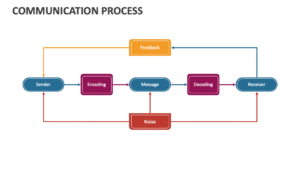
® Step 1 Source: The source comes up with an idea and sends a message in order to share information with others. The source could be one person or a group of people.
® Step 2 Message: The message is the information or subject matter the source is intending to share. The information may be an opinion, feelings, instructions, requests, or suggestions.
® Step 3 Channels: The source may encode information in the form of words, images, sounds, body language and more. There are many definitions and categories of communication channels to describe their role in the communication process, including verbal, non-verbal, written and digital.
® Step 4 Receiver: The receiver is the person for whom the message is intended. This person is charged with decoding the message to understand the intentions of the source.
® Step 5 Environment: The environment is the physical and psychological space in which the communication is happening. It might also describe if the space is formal or informal.
® Step 6 Context: The context is the setting, scene and psychological and psychosocial expectations of the source and the receiver(s). This is strongly linked to expectations of those who are sending the message and those who are receiving the message.
® Step 7 Interference: There are many kinds of interference (also called “noise”) that inhibit effective communication. Interference may include poor audio quality or too much sound, poor image quality, too much or too little light, attention, etc.
® Step 8 Feedback: It is the ultimate aspect of communication process. It refers to the response of the receiver as to the message sent to him/her by the sender.
1.5 METHODS OF COMMUNICATION
Communication is an integral instinct of all living things. At its simplest, communication is any exchange of information between two entities. There are various methods to communicate with each other. Some of them are as follows:
(a) Verbal communication
The verbal communication is a type of oral communication wherein the message is transmitted through the spoken words. Here the sender gives words to his feelings, thoughts, ideas and opinions and expresses them in the form of speeches, discussions, presentations and conversations.
The success of the verbal communication depends not only on the speaking ability of an individual but also on the listening skills. How effectively an individual could listen to the subject matter decides the effectiveness of the communication. The verbal communication is applicable in both the formal and informal kind of situations.
(b) Nonverbal communication
Non-verbal communication includes facial expressions, the tone and pitch of the voice, gestures displayed through body language (kinesics) and the physical distance between the communicators (proxemics).

These non-verbal signals can give clues and additional information and meaning over above spoken (verbal) communication. Indeed, some estimates suggest that around 70 to 80% of communication is non-verbal.
(c) Written communication
It is the act of writing, typing or printing symbols like letters and numbers to convey information. It is helpful because it provides a record of information for reference.
The communication which is performed through any written document is called written communication. When messages or information is exchanged or communicated in written form is called written communication. It is a word-based communication system. Memos, letters, reports, notes, email etc. It is used to transmit meaning in written communication.Example: E-mail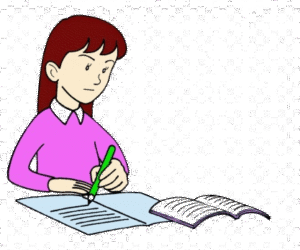
(d) Visual communication
It is the act of using photographs, art, drawings, sketches, charts and graphs to convey information. Visuals are often used as an aid during presentations to provide helpful context alongside written and/or verbal communication
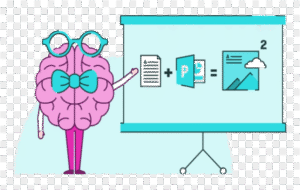
Visual communication is nothing but using visuals like charts, graphs, diagrams to represent information. Right from school, we see many visual communications in our book we draw some in our projects. In businesses, these form one of the essential forms of communication, especially in presentations.
1.6 BARRIERS OF COMMUNICATION
A communication barrier is anything that prevents us from receiving and understanding the messages others use to convey their information, ideas and thoughts. They can interfere with or block the message you are trying to send.
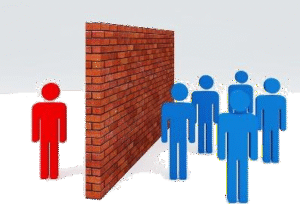
This far we have seen what we mean by the process of communication. But, at times even after taking care of every other detail some misunderstandings arise. So, to eliminate these misunderstandings, we
have to understand the most common barriers that effect communication.
1.6.1 Common barriers that affect communication
Good communication is not just a process of transferring information from one entity to another. It’s an art of first listening or reading the information, comprehending it, processing it and then transferring it. There are many ways through which the communication gets affected which leads to miscommunication. Some of them are as follows:
(a) Linguistic barriers
The Linguistic barrier is one of the main barriers that limit effective communication. Language is the most employed tool of communication. The fact that each major region has its own language is one of the barriers to effective communication. Sometimes even a thick dialect may render the communication ineffective.

As per some estimates, the dialects of every two regions changes within a few kilometres. Even in the same workplace, different employees will have different linguistic skills. As a result, the communication channels that span across the organization would be affected by this. Thus, keeping this
barrier in mind, different considerations must be made for different employees. Some of them are very proficient in a certain language and others will be ok with these languages.
(b) Psychological barriers
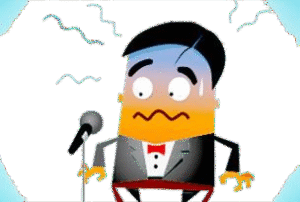
There are various mental and psychological issues that may be barriers to effective communication. Some people have stage fright, speech disorders, phobia, depression etc. All these conditions are very difficult to manage sometimes and will most certainly limit the ease of communication.
(c) Language barriers
The language barrier is one of the main barriers that limit effective communication. Language is the most employed tool of communication. The fact that each major region has its own language is one of the barriers to effective communication.

(d) Emotional barriers
The emotional intelligence quotient (IQ) of a person determines the ease and comfort with which they can communicate. A person who is emotionally mature will be able to communicate effectively. On the other hand, people who let their emotions take over will face certain difficulties.

A perfect mixture of emotions and facts is necessary for effective communication. Emotions like anger, frustration, humour, can blur the decision-making capacities of a person and thus limit the effectiveness of their communication.
(e) Physical barriers
They are the most obvious barriers to effective communication.

These barriers are mostly easily removable in principle at least. They include barriers like noise, closed doors, faulty equipment used for communication, closed cabins, etc. Sometimes, in a large office, the physical separation between various employees combined with faulty equipment may result in severe barriers to effective communication.
(f) Cultural barriers
As the world is getting more and more globalized, any large office may have people from several parts of the world. Different cultures have a different meaning for several basic values of society. Dressing, Religion or lack of them, food, drinks, pets and the general behaviour will change drastically from one culture to another.
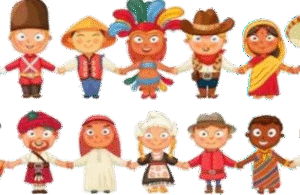
Hence it is a must that we must take these different cultures into account while communication. This is what we call being culturally appropriate.
In many multinational companies, special courses are offered at the orientation stages that let people know about other cultures and how to be courteous and tolerant of others.
(g) Organisational structure barriers
There are many methods of communication at an organizational level. Each of these methods has its own problems and constraints that may become barriers to effective communication. Most of these barriers arise because of misinformation or lack of appropriate transparency available to the employees.

Example: Status or hierarchical positions in organization – In every organization, the employees are divided into several categories based on their levels of the organization. The people occupying the upper echelons of the hierarchy are superior to the ones occupying the lower levels and thus, the communication among them would be formal. This formal communication may often act as a barrier to the effective communication. Such as the lower level employee might be reluctant in sending a message to his superior because of a fear in his mind of sending the faulty or wrong message
(h) Attitude barriers
Certain people like to be left alone. They are the introverts or just people who are not very social. Others like to be social or sometimes extra clingy. Both these cases could become a barrier to communication. Some people have attitude issues, like huge ego and inconsiderate behaviours.
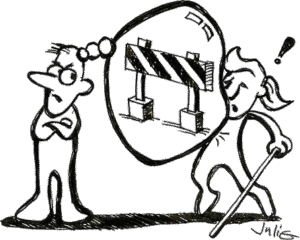
These employees can cause severe strains in the communication channels that they are present in. Certain personality traits like shyness, anger, social anxiety may be removable through courses and proper training. However, problems like egocentric behaviour and selfishness may not be correctable.
(i) Perception barriers
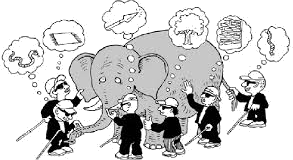
Different people perceive the same things differently. This is a fact which we must consider during the communication process. Knowledge of the perception levels of the audience is crucial to effective communication. All the messages or communique must be easy and clear. There shouldn’t be any room for a diversified interpretational set.
(j) Psychological barriers

Certain disorders or diseases or other limitations could also prevent effective communication between the various channels of an organization. The shrillness of voice, dyslexia, etc. is some examples of physiological barriers to effective communication. However, these are not crucial because they can easily be compensated and removed.
(k) Technological barriers
Other barriers include the technological barriers. The technology is developing fast and as a result, it becomes difficult to keep up with the newest developments. Hence sometimes the technological advance may become a barrier. In addition to this, the cost of technology is sometimes very high.
Most of the organizations will not be able to afford a decent tech for the purpose of communication. Hence, this becomes a very crucial barrier. Other barriers are socio-religious barriers. In a patriarchal society, a woman or a transgender may face many difficulties and barriers while communicating.
1.6.2 Overcoming barriers of communication
Barriers may lead to your message becoming distorted and you therefore risk wasting both times and/or money by causing confusion and misunderstanding. There are many ways to overcome communication barriers. By following the steps given below you can fix it up to certain limit.
- Active listening: ‘Active listening’ means, as its name suggests, actively listening. That is fully concentrating on what is being said rather than just hearing the message of the speaker. Active listening is a skill that can be acquired and developed with practice. However, this skill can be difficult to master therefore, it takes time and patience.
- Use simple language: It’s important to remember the audience that you’re speaking to and use language that can be easily understood. Avoid using medical terminology or jargon when speaking to clients and their families. People are often intimidated by such language and can be afraid to admit that they don’t understand the message being delivered. An important tool to use when speaking is to pause occasionally and ask questions to ensure that your message is being understood as intended. You may also allow the listener to ask questions to clarify any points
- Give constructive feedback: Remember that feedback was part of the communication chain we looked at in the first page. While be negative, it is important that it be constructive in The intent of the feedback should be to improve the abilities of the speaker. This will strengthen the interpersonal relationship and enhance future communications.
1.7 DO’S AND DON’T’S IN COMMUNICATION
Communications is fundamental to the existence and survival of humans as well as to an organization. It is a process of creating and sharing ideas, information, views, facts, feelings, etc. among the people to reach a common understanding. Given below are the do’s and don’ts of communication.
Do’s |
Don’ts |
|
Be a good listener and stay focused on the person who is speaking. |
Avoid judging people and praise them often. |
|
Maintain eye contact with the person. |
Don’t overcomplicate your message. |
|
Behave confidently and communicate with a stable and clear voice. |
Don’t criticize in public. |
|
Use simple and polite language. |
Don’t shout or talk too fast. |
|
Learn to say ‘no’ politely but firmly. |
Don’t show negative body language |
1.8 PRESENTATION SKILLS
Presentation skills are the skills you need in delivering effective and engaging presentations to a variety of audiences. Presenting information clearly and effectively is a key skill in getting your message across. Today, presentation skills are required in almost every field and most of us are required to give presentations on occasions. While some people take this in their stride, others find it much more challenging.
It is, however, possible to improve your presentation skills with a bit of work. The following points are to be kept in mind while doing a presentation. They are as follows:
® Provide real life examples.
® Provide eye contact.
® Keep it simple.
® Say stories.
® Expressive body language.
® Show your passion and connect with your audience.
® Focus on your audience’s needs.
® Smile with your audience.
® Start strongly.
1.8.1 Steps to be taken before a presentation
We know what the points are to keep in mind while doing a presentation. The following are the steps to do before a presentation.
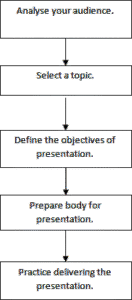
® Step 1 Analyse your audience: The first step in preparing a presentation is to learn more about the audience to whom you’ll be speaking. It’s a good idea to obtain some information on the backgrounds, values and interests of your audience so that you understand what the audience might expect from your presentation.
® Step 2 Select a topic: Select a topic that is of interest to the audience and to you. It will be much easier to deliver a
presentation that the audience finds relevant and more enjoyable to research a topic that is of interest to you.
® Step 3 Define the objective of presentation: Once you have selected a topic, write the objective of the presentation in a single concise statement. The objective needs to specify exactly what you want your audience to learn from your presentation.
® Step 4 Prepare your body for presentation: The body of the presentation is where you present your ideas. To present your ideas convincingly, you will need to illustrate and support them. Strategies to help you do this include the following:
- Present data and facts
- Read quotes from experts
- Relate personal experiences
- Provide vivid descriptions
® Step 5 Practice delivering the presentation: Most people spend hours preparing a presentation but very little time practicing it. When you practice your presentation, you can reduce the number of times you utter words and phrases like, “um,” “well,” and “you know”.
1.9 ACTIVE LISTENING
Active listening involves the listener observing the speaker’s behaviour and body language. Having the ability to interpret a person’s body language lets the listener develop a more accurate understanding of the speaker’s message. Having heard, the listener may then paraphrase the speaker’s words.

As well as giving full attention to the speaker, it is important that the active listener is also seen to be listening; otherwise the speaker may conclude that what they are talking about is uninteresting to the listener. By providing this feedback the person speaking will usually feel more at ease and therefore communicate more easily, openly and honestly.
Active listening characteristics include:
® Building trust and establishing rapport.
® Demonstrating concern.
® Paraphrasing to show understanding.
® Nonverbal cues which show understanding such as nodding, eye contact and leaning forward.
® Brief verbal affirmations like “I see,” “I know,” “Sure,” “Thank you,” or “I understand”.
1.9.1 Steps in active listening
Active listening involves listening with all senses. There are various steps to be taken to improve your active listening:
® Step 1: Approach each dialogue with the goal to learn something.
® Step 2: Stop talking and focus closely on the speaker.
® Step 3: Open and guide the conversation.
® Step 4: Understand the specific details.
® Step 5: Summarize what you hear and ask questions to check your understanding.
® Step 6: Encourage with positive feedback.
® Step 7: Listen for meaning.
® Step 8: Pay attentions to responses.